

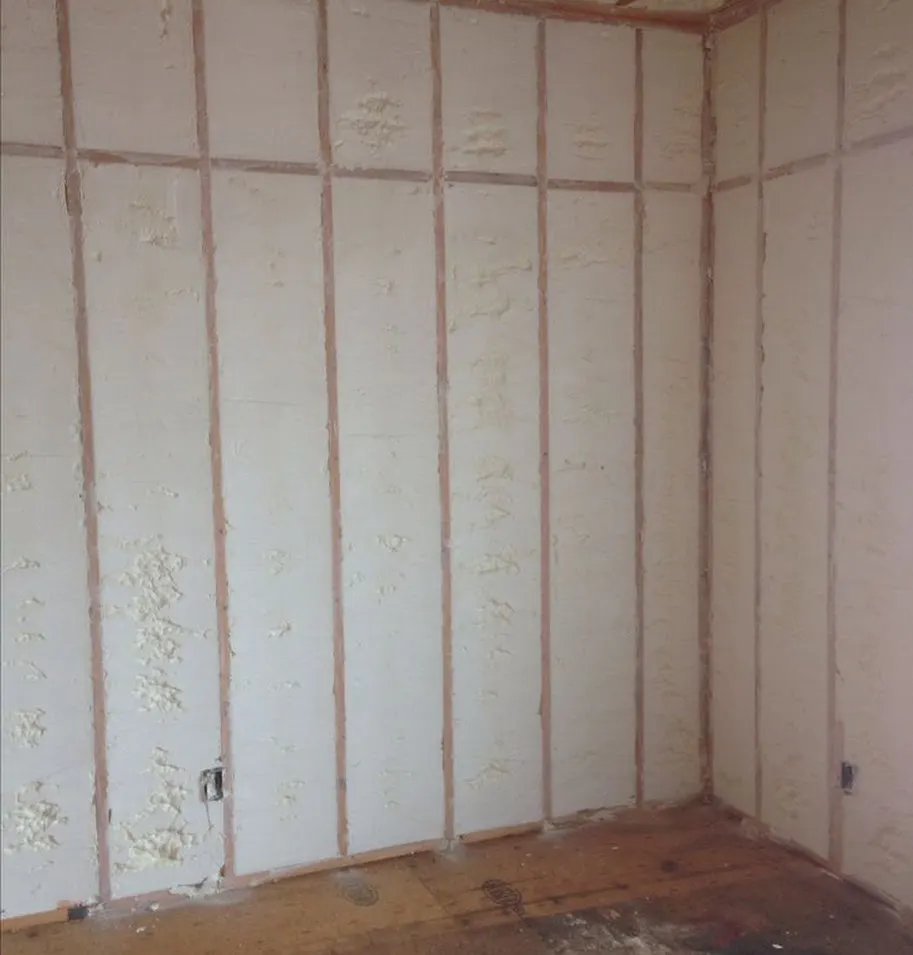
Before hiring a spray foam insulation contractor, ask about licensing, certification, insurance coverage, the exact foam product being proposed, crew training, safety and ventilation practices, reoccupancy times, warranty terms, and the written documentation you will receive. The right choice depends on your project: new construction and large open areas call for high-pressure systems applied by a highly trained crew, while retrofits and smaller spaces often suit low-pressure systems paired with a careful look at moisture and ventilation risk. You should also ask which foam type fits your goals, because open-cell and closed-cell products perform very differently in an Inland Northwest climate.
Spray polyurethane foam is created on site by mixing a reactive isocyanate side with a polyol resin side, and the mixture expands up to 30 to 60 times its liquid volume after it is sprayed in place, according to Wikipedia’s overview of spray foam. Once cured, it is not easily reversible, so a mistake becomes part of your walls, roof deck, or crawl space.
That permanence is why the questions below matter. Property surveyors at RICS note in their consumer guide that incorrectly installed insulation can disrupt ventilation, trap moisture, and lead to damp and condensation damage. A contractor who welcomes detailed questions is showing you how the job will actually be run. One who bristles at them is telling you something too.
Start with credentials, because these are the easiest to verify and the fastest to fake. Ask each of the following and write down the answers:
Insurance questions are not a formality. General liability policies cover property damage and bodily injury, but they typically do not pay for removing or replacing poorly installed insulation, so ask the contractor to explain what their policy does and does not cover. Request a certificate of insurance and confirm the policy is active and has not lapsed.
Then call the references. Ask prior customers whether the crew arrived when promised, how the site was left, and whether anyone followed up after professional spray foam insulation installation. Membership in a professional trade association is another signal that a contractor treats this as professional work rather than a side business.
The product conversation is where a true specialist separates from a generalist. Ask which foam is proposed, why, and at what thickness. The two main options behave differently:
| Attribute | Open-Cell Foam | Closed-Cell Foam |
|---|---|---|
| Typical R-value | Around R-3.8 per inch | R-5.1 to 6 per inch |
| Density and feel | Light, sponge-like, semi-rigid | Dense, rigid, 2 lb foam |
| Vapor control | Air permeable | Vapor barrier at required thickness |
| Best uses | Interior walls, sound control, large cavities | Rim joists, crawl spaces, roofs, exterior walls |
| Key limitation | Not a vapor barrier in thin layers | Higher material demand per cavity |
Follow the product questions with building science questions. For an attic retrofit, ask how ventilation will be managed and whether the roof deck is dry enough to accept foam. RICS advises that thermal calculations and condensation risk checks be completed by a qualified professional before spray foam is applied, and that homeowners keep that documentation for the future. Ask to see the product’s R-value documentation as well, since contractors generally carry printed performance data for the installed product.
This category matters to your family, your pets, and anyone else in the building. Spray foam chemicals include isocyanates, and OSHA warns that hazardous exposures are linked to occupational asthma, lung problems, and irritation of the skin, eyes, nose, throat, and respiratory tract. Proper handling protects everyone on site.
Ask these five questions:
A written contract protects both sides even when the law does not require one. Before signing, confirm it includes the specific product being installed, the full scope, start and completion dates, cleanup and drum removal arrangements, and the reoccupancy period. Also clarify who issues the warranty: manufacturers generally warrant product performance, contractors warrant workmanship, and the strongest jobs come with both in writing.
Finally, ask who pulls the permit and whether a final inspection will happen. Many jurisdictions require permits for insulation work, and a contractor who handles the permitting and invites inspection is demonstrating confidence in the result. After completion, keep the contract, warranty, SDS, and any posted insulation card with your home records, since RICS cautions that missing documentation can complicate future surveys and property sales.
| Warning Sign | What a Professional Does Instead |
|---|---|
| Vague answers about foam type or thickness | Names the product, target thickness, and R-value in writing |
| No certificate of insurance | Provides a current certificate without being asked twice |
| Cash-only, no written contract | Delivers a detailed written contract and warranty |
| Skips walk-through and prep | Inspects the site, plans ventilation, seals HVAC intakes |
| Pressure tactics and unrealistic timelines | Gives honest scheduling with cure and reoccupancy times |
| No references or no association membership | Offers references and stands behind industry credentials |
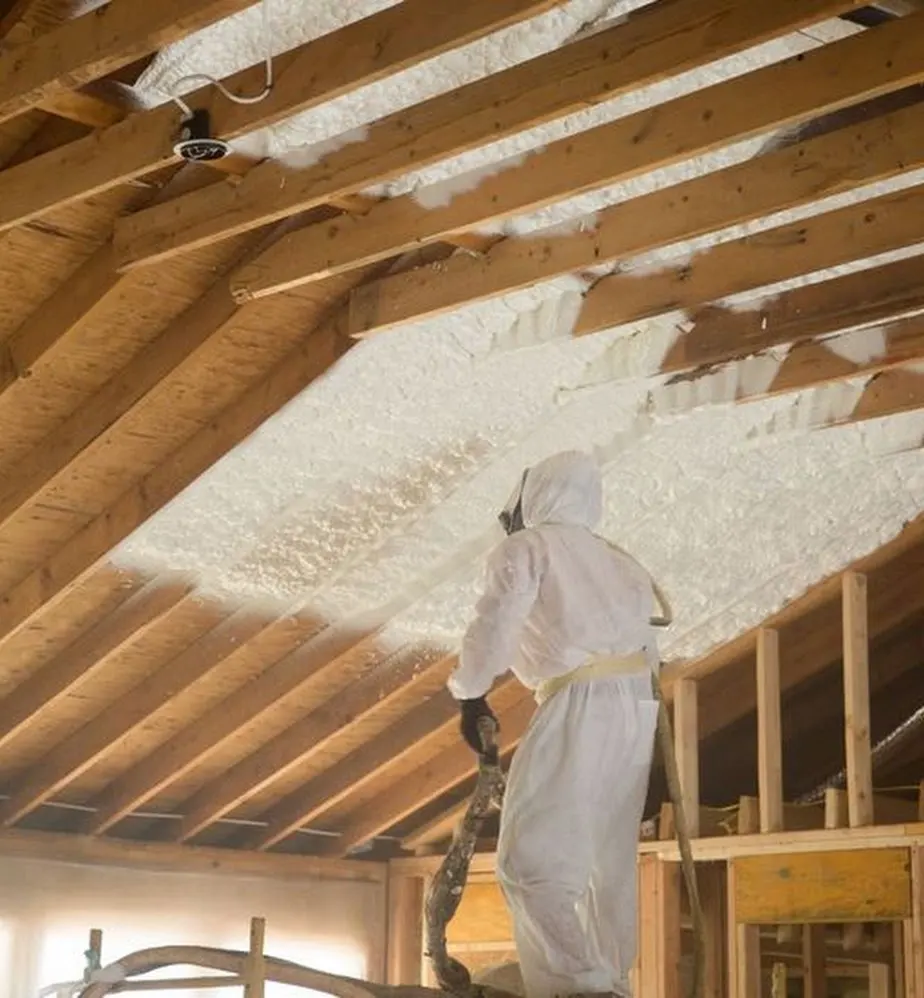
| Project Type | What to Emphasize | Key Notes |
|---|---|---|
| New construction | High-pressure two-part systems, certified supervisors | Whole-wall applications demand experienced applicators |
| Attic or roof retrofit | Condensation risk assessment, ventilation plan | Ask for pre-install moisture readings and calculations |
| Crawl spaces and rim joists | Closed-cell performance and vapor control | Confirm substrate condition before application |
| Shops, barns, and shops with metal buildings | Condensation on steel, substrate prep | Metal surfaces need clean, dry prep for adhesion |
| Sound-sensitive interior spaces | Open-cell in interior walls | Adds sound damping while air sealing the cavity |
If you are comparing installers, put us on your list and ask us every question in this guide. Our crew serves homeowners and builders across the Inland Northwest from our home base in Spokane, and we are happy to walk your project, explain foam options, and put every detail in writing. Call Inland Northwest Spray Foam at (509) 471-0006 or email [email protected] to get started, and choose the next step below.
Get the answers first, then hire with confidence.
Two or three written bids is a sensible target. Compare foam type, target thickness, scope, warranty, and documentation rather than deciding on the bottom line alone.
Occupants leave during application, and the safe return time depends on the formulation, amount of foam, temperature, humidity, and ventilation. Your contractor should confirm the manufacturer’s reoccupancy guidance in writing before work begins.
Neither is universally better. Closed-cell suits rim joists, crawl spaces, and applications needing vapor control, while open-cell works well in interior walls and large cavities where sound damping and lower density are priorities.
Yes, within the manufacturer’s temperature and humidity limits. A careful contractor checks substrate temperature and moisture before spraying, which matters during cold Spokane-area months.
Keep the signed contract, written warranty, Safety Data Sheets, and the posted insulation or R-value card. These records support future remodels, appraisals, and resale conversations.