

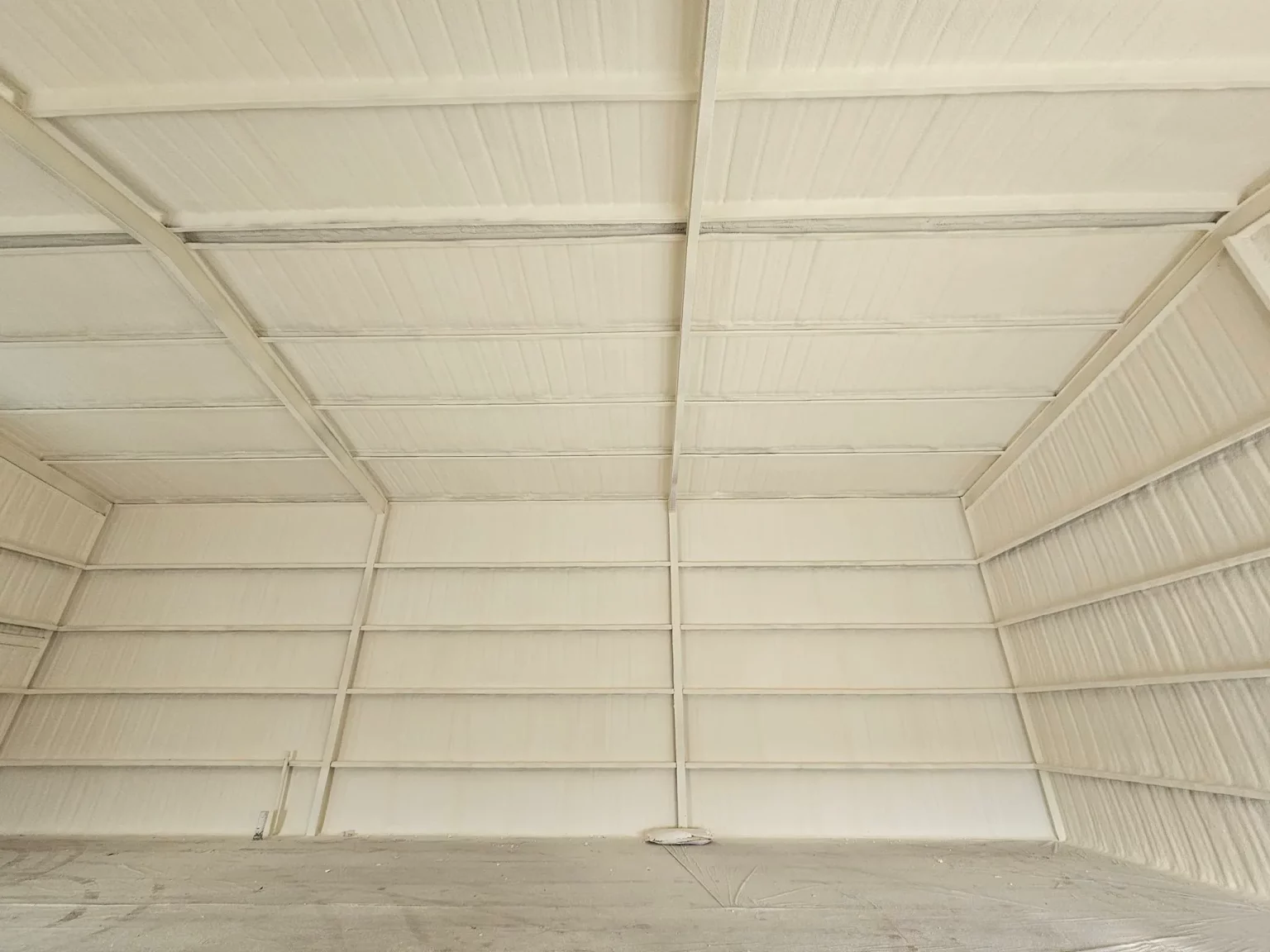
Closed-cell spray foam insulation strengthens a building envelope by doing the job of four materials at once: it insulates at roughly R-5 to R-6.7 per inch, seals every gap and seam as a continuous air barrier, blocks moisture as a low-permeability vapor barrier, and adds rigidity to wall and roof assemblies through a bonded layer of rigid foam that adheres directly to framing and sheathing. For builders, remodelers, and property owners across the Inland Northwest, where high winds, cold snaps, and seasonal moisture push building assemblies hard, that combination makes closed-cell foam one of the most effective single-product strategies for tightening, protecting, and reinforcing a structure. The right approach still depends on your climate zone, assembly design, and code requirements, so this guide breaks down exactly how each envelope function works, where closed-cell foam delivers the most value, and where a different strategy makes more sense.
A building envelope is the physical boundary between conditioned space and the outdoors. To perform, it has to manage four things at the same time:
Most wall systems handle these jobs with separate products: batts for insulation, house wrap for air, poly sheeting for vapor, and sheathing for structure. Every seam, staple, and joint between those products is a potential failure point. Closed-cell spray foam simplifies the system because a single applied product addresses the first three control layers while reinforcing the fourth.
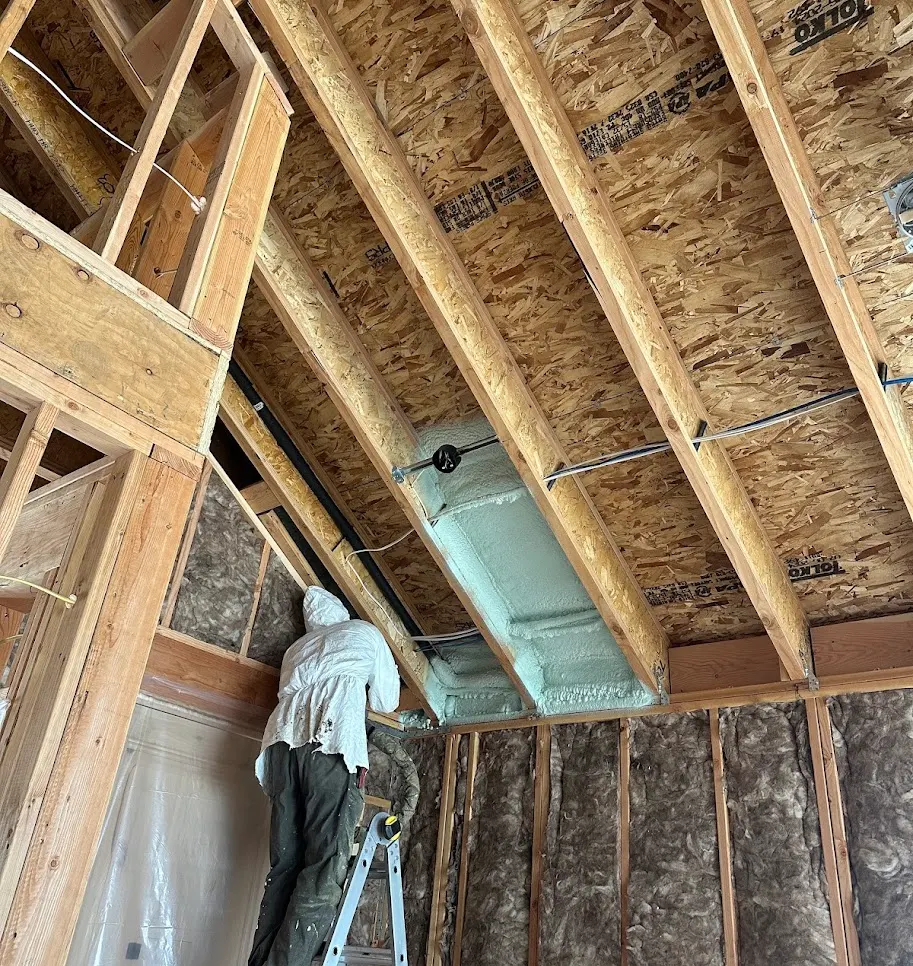
When applied, the two liquid chemical parts react and expand up to 30 to 60 times their liquid volume, filling cavities, cracks, and irregular framing bays before curing into a rigid plastic mass. That expansion is what lets the foam reach spots a cut board or rolled batt can never fully cover.
The strength benefit comes from adhesion and density. Closed-cell foam is a medium-density product, typically 1.75 to 2.25 pounds per cubic foot, and it is rigid to the touch once cured. Because it bonds directly to studs, sheathing, and subfloors as it cures, it ties the assembly together into a more unified structure.
According to the spray foam industry’s building science resources, walls containing closed-cell spray foam maintain their shape and integrity under stress more effectively than conventional wall assemblies, because the foam creates a rigid, bonded layer inside the cavity. In practical terms, that stiffness improves racking resistance, meaning the wall resists the sideways shearing forces produced by wind and seismic events.
The same principle applies overhead. In an unvented attic, foam applied directly to the underside of the roof deck forms a continuous, bonded layer that improves the roof’s ability to handle high wind loads and reduces the risk of wind uplift, a leading cause of roof failure during hurricanes and severe storms. For property owners in wind-exposed areas of the Inland Northwest, from open Palouse farmland to lake-effect zones, that added roof deck connection is a meaningful resilience upgrade.
R-value gets the attention, but air movement is often the bigger enemy. Studies referenced by the U.S. Department of Energy attribute up to 40% of a home’s energy loss to air infiltration through walls, windows, and doorways. Warm interior air escaping through gaps carries heat with it, and replacing that lost heat drives heating costs all winter.
Closed-cell spray foam functions as an air barrier in a single thin application, sealing the cracks, seams, and joints that conventional insulation leaves open. Fiberglass and cellulose slow heat flow but do very little to stop air passing through them, which is why a high-R wall with leaky interfaces still underperforms.
The payoff shows up on utility bills. ENERGY STAR reports that sealing air leaks and adding insulation can save homeowners up to 10% on annual energy costs, and tighter envelopes also let new construction specify smaller HVAC equipment because the heating and cooling load is lower from day one.
Water is the envelope’s second adversary, and closed-cell foam handles it in two ways:
This resilience extends to flooding. FEMA’s flood damage-resistant materials guidance classifies spray foam insulation as highly resistant to floodwater damage, noting these materials “can survive wetting and drying and may be successfully cleaned after a flood to render them free of most harmful pollutants.” For crawl spaces, basements, and low-lying sites, that is a durability margin few insulation products can match.
Moisture control also protects the structure itself. As the EPA states in its mold guidance, the key to mold control is moisture control, and wet materials must be dried within 24 to 48 hours to prevent growth. A cavity filled with low-permeability closed-cell foam keeps condensation-prone surfaces covered and dry, protecting framing from the rot and mold that degrade envelope performance over time.
| Performance Factor | Closed-Cell Foam | Open-Cell Foam |
|---|---|---|
| R-value per inch | Greater than 6.0 | Approximately 3.5 |
| Density | 1.75 to 2.25 lbs./ft³ | 0.4 to 1.2 lbs./ft³ |
| Air barrier | Yes, at standard thickness | Only at full wall thickness |
| Vapor barrier | Yes, at minimum thickness | No, permeable |
| Water resistance | Resists water absorption | Not suited for water contact |
| Structural rigidity | High, bonds and stiffens assemblies | Low, remains soft |
| Best use | Exterior walls, roofs, crawl spaces, rim joists | Interior walls, sound control |
Our crew sees the strongest return on closed-cell foam in these applications:
| Project Context | Recommended Approach | Key Notes | Envelope Outcome |
|---|---|---|---|
| New residential construction | Closed-cell in walls and roof deck | Coordinate thermal barrier and code inspection timing | High-performance, code-ready envelope |
| Cold climate homes, Inland Northwest winters | Closed-cell at code-plus thickness | Thin lifts only as a vapor barrier apply, thickness matters | Warmer floors, lower heating load |
| Crawl spaces and basements | Closed-cell on walls and rim joists | Manage ground moisture and drainage first | Dry, insulated perimeter |
| Post-frame and metal buildings | Closed-cell directly to framing and steel | Prevents condensation on cold metal surfaces | Condensation control plus insulation |
| Flood-prone or low-lying sites | Closed-cell below expected water line | FEMA-recognized flood-resistant material | Faster recovery, less tear-out |
| Interior sound control | Open-cell in partition walls | Not a vapor barrier at thin thickness | Acoustic benefit only |
A stronger envelope starts with a clear look at how your walls, roof, and foundation assemblies are actually performing. At Inland Northwest Spray Foam, our team designs and installs closed-cell spray foam systems for new construction, retrofits, crawl spaces, and metal buildings across the Inland Northwest, and we will match the product and thickness to your assembly instead of selling you a one-size-fits-all application. Call us at (509) 471-0006 or email [email protected] to talk through your project with our specialists.
Build once, seal it right, and let your envelope work for you every season.
Yes. Because the foam bonds directly to framing and sheathing as it cures, it forms a rigid layer that helps wall assemblies resist racking forces and maintain shape under stress. Applied to a roof deck, it also reduces wind uplift risk.
Medium-density closed-cell foam functions as both an air barrier and vapor barrier when installed at the required minimum thickness of about 50 mm (2 inches). Thinner passes still insulate and seal air, but vapor performance depends on full specified depth.
Yes, and it is one of the strongest use cases. Spraying foam directly to the roof deck brings ductwork inside conditioned space, improves wind load performance, and simplifies the attic’s thermal and air control layers into a single application.
Properly installed closed-cell foam is stable for the life of the building and does not settle, sag, or degrade the way loose-fill products can. Spray foam roofing systems, for comparison, are recognized for service lives exceeding 30 years with maintenance.
Often, yes. Federal energy efficiency tax credits can apply to qualifying insulation and air sealing improvements, and credits exist for builders of energy-efficient new homes. We recommend confirming current eligibility with your tax professional before filing.