

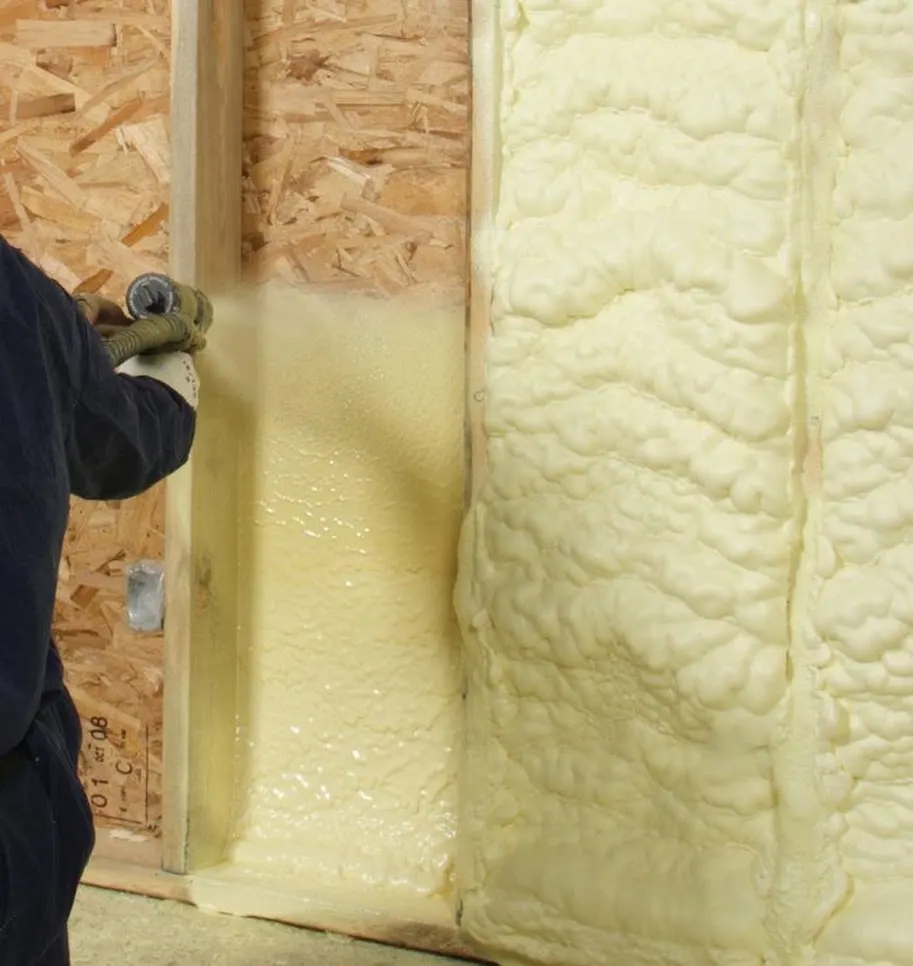
Open-cell foam insulation is a low-density, water-blown spray polyurethane foam that insulates and air-seals at roughly R-3.6 to R-3.8 per inch, and a good outcome depends on matching the material to the right part of your home, your climate, and careful moisture management. It performs best in above-grade wall cavities, attic assemblies, and interior sound control, but it is the wrong choice below grade, and cold-climate walls need a vapor-retarding interior finish to stay dry over the long run. Before you commit, you should understand where it fits, how building codes treat exposed foam, what installation day looks like for your family, and how to judge a crew. This guide walks through each of those decisions using government research and industry data, so you can compare open cell and closed cell options with confidence.
Open-cell spray polyurethane foam, often called half-pound foam, forms when two liquid chemicals meet at the spray gun and expand to roughly 150 times their liquid volume. Because it is primarily water-blown, the cured product stays soft and sponge-like, with millions of interconnected cells filled with air. Those open cells stop air movement, which is exactly what makes spray foam outperform fiberglass and cellulose at blocking uncontrolled airflow, but they also allow water vapor to diffuse through the material.
That combination defines the material’s personality. It seals gaps, cracks, and voids that batt insulation simply cannot reach, and it stays somewhat flexible after curing. Applied in a single pass, crews can generally install it up to 10 inches thick, which makes deep wall cavities, cathedral ceilings, and unvented attic decks practical targets. Polyurethane has been used as building insulation since 1979, so the chemistry is well established, but the details of each installation still decide long-term performance.
The two foam types are chemically similar, but the Department of Energy’s Building America program stresses that they are not interchangeable in all applications. Here is how the properties compare:
| Property | Open Cell (ocSPF) | Closed Cell (ccSPF) |
|---|---|---|
| Density | ~0.5 lb/cu ft | ~2.0 lb/cu ft |
| Aged R-value per inch | ~R-3.6 to R-3.8 | ~R-6 |
| Vapor permeance | 5 to 10 perms at 5″ (vapor-open) | Under 1 perm at 2″ (vapor retarder) |
| Reaction to liquid water | Can absorb and hold up to 1/3 of its volume | Hydrophobic, does not absorb |
| Expansion ratio | ~150x liquid volume | 35x to 50x |
| Application style | Single pass, generally up to 10″ | 2″ to 3″ lifts per pass |
| Feel and structure | Soft, compressible | Rigid, adds wall racking strength |
In practical terms, open cell gives you more R-value per dollar of cavity depth in above-grade framing, plus genuinely strong sound absorption. Closed-cell foam gives you moisture resistance and rigidity where water is a threat. Choosing based on application, not habit, is the single most important decision you will make.
| Application | Open Cell Verdict | Notes |
|---|---|---|
| Frame walls, cold climates | Preferred | Pair with an interior vapor retarder |
| Interior partition walls | Strong fit | Reduces sound transfer between rooms |
| Unvented attic roof decks | Acceptable | Follow manufacturer thickness limits and barrier requirements |
| Ceiling below a vented attic | Acceptable | Excellent for sealing recessed lights and penetrations |
| Band joists and rim joists | Acceptable | A high-impact, small-area upgrade |
| Basements and below-grade walls | Not acceptable | Closed-cell is the right material here |
| Behind brick veneer | Not acceptable | The foam must stay protected from bulk water |
Sound control deserves special mention: open cell foam in a 2×4 wood stud wall carries an STC rating of about 37, which is why we often recommend it for media rooms, nurseries, and home offices.
In cold climates, moisture moves from the warm, humid interior toward the cold exterior during winter. Because open-cell foam is vapor-open, an interior vapor-retarding finish, such as vapor-retarder primer or multiple coats of latex paint, is needed to keep moisture from accumulating in the wall. The exterior sheathing and cladding should also remain vapor-permeable so the wall can dry outward. The DOE guide documents at least one catastrophic cold-climate failure caused by pairing open-cell foam with no interior vapor control and a moisture-impermeable exterior. In hot-humid regions, the rules flip, and interior vapor retarders must be avoided entirely. In our cold Inland Northwest winters, this interior-finish detail is one of the first things our team reviews on every quote.
Both foam types are combustible, and model codes treat them accordingly. In habitable spaces, spray foam insulation must be covered by a 15-minute thermal barrier, the equivalent of 1/2-inch gypsum board, tested under ASTM E119 Spray Foam. Attics and crawlspaces entered only for utilities may qualify for an ignition barrier instead, but the specific approval depends on each product’s evaluation report. Ask any installer to confirm, in writing, which barrier your assembly requires and how it will be achieved.
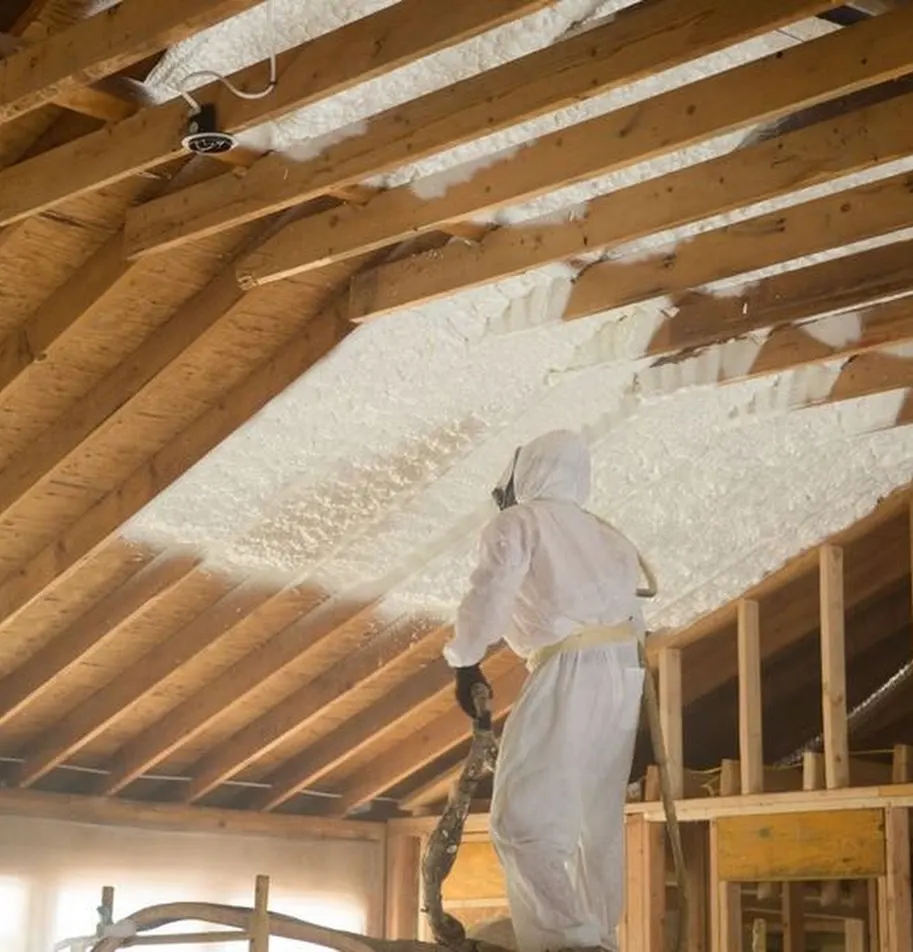
Professional application is a controlled process, not a quick spray. Per the EPA’s contractor checklist for spray polyurethane foam, crews should verify temperature and humidity conditions, run a test spray and check foam quality, apply the foam in manufacturer-approved lifts, isolate HVAC systems, and ventilate the work zone throughout. Occupants should vacate during application, curing, trimming, and cleanup, and stay out until the home has been ventilated and cleaned of dust and debris. Many manufacturers recommend about 24 hours before re-entry. NIST research for the Consumer Product Safety Commission reports the same 24-hour guidance, and notes that most health complaints trace back to improper application rather than properly cured foam, which is inert. One more detail: because foam tightens the envelope, our crew confirms that combustion appliances cannot backdraft after air sealing is complete.
Ask direct questions and expect direct answers:
Installing open cell foam insulation is a one-time project with decades of consequences, and doing it right comes down to matching the foam to your home and executing the moisture, fire, and ventilation details correctly. We handle open-cell and closed-cell installations across the Inland Northwest, and our team will walk your project, explain every layer of the plan, and give you a clear written scope before any foam is sprayed. Call Inland Northwest Spray Foam at (509) 471-0006 or email [email protected] to get started. Request a quote today or schedule an insulation assessment with our crew.
No. Occupants should leave during application and curing and stay out until the home is ventilated and cleaned, with many manufacturers recommending about 24 hours. Our team confirms re-entry timing for your specific project in writing.
Yes. Cured open cell foam is inert, and the exposure concerns raised by the EPA and NIST relate to chemicals present during application and curing. That is why professional crews ventilate the work zone and control access.
Yes, it is rated a preferred insulation for cold-climate frame walls. The requirement is an interior vapor retarder, such as vapor-retarder primer or latex paint, and a vapor-permeable exterior so the wall can dry outward.
Open-cell foam is not acceptable below grade because it can absorb and hold liquid water. Closed cell foam is the correct material for basements, crawlspaces, and anywhere bulk moisture is possible.
It will. Open-cell foam absorbs airborne sound, and a filled 2×4 stud wall reaches an STC rating around 37, which makes interior partitions noticeably quieter for bedrooms, offices, and media rooms.